

Legal Responsibilities for IT Disposal
Understanding IT Disposal Responsibilities
Organisations should take care when disposing of IT equipment because redundant devices may contain sensitive data and electronic components that require responsible handling.
IT disposal is not simply about removing old equipment. It can involve data protection, environmental responsibilities, waste transfer records and internal accountability.
Understanding these responsibilities helps organisations reduce risk and ensure equipment is handled through a secure, structured and documented disposal process.
This guide provides general information only and does not replace legal advice. Organisations should seek appropriate professional or legal advice for their specific responsibilities where required.
Data Protection Responsibilities
One of the most important considerations during IT disposal is protecting data stored on equipment.
Devices such as computers, laptops, servers, mobile phones, tablets, hard drives, SSDs, USB devices and backup media may contain personal, confidential or commercially sensitive information.
The Information Commissioner’s Office highlights that personal information should be properly deleted before hardware is sold or disposed of so it cannot be accessed by others. The ICO also notes that organisations should obtain evidence of secure disposal from third parties used to dispose of personal information.
A structured disposal process can include secure collection, certified data destruction and documentation to help organisations manage data-bearing devices responsibly.
Environmental Responsibilities
In addition to data protection, organisations should consider how electronic waste is handled when disposing of IT equipment.
Computers, laptops, servers, printers, monitors, mobile phones, batteries and other electrical or electronic items should be directed through appropriate recycling, reuse or recovery routes rather than general waste routes.
WEEE recycling helps organisations manage electrical and electronic equipment responsibly by supporting collection, treatment, recycling and material recovery.
Duty of Care for Electronic Waste
Organisations that produce, store, transport or dispose of business waste have a duty of care to ensure waste is handled responsibly.
For IT equipment and WEEE, this can include storing equipment safely before collection, keeping items separate where appropriate, using suitable collection or recycling routes and keeping clear records of waste transfers.
The exact documentation required can depend on the waste type, transfer route and circumstances, so organisations should seek appropriate advice where required.
Using a structured IT disposal and WEEE recycling provider can help organisations maintain clearer records and reduce unmanaged disposal risk.
Risks of Poor IT Disposal
Poorly managed IT disposal can create unnecessary risk for organisations.
Data exposure from unprocessed storage devices
Loss of confidential business, customer, staff or student information
Inadequate disposal records
Electronic equipment entering unsuitable waste routes
Environmental harm from poor handling of WEEE
Unclear asset management records
Reputational damage if equipment or data is mishandled
Internal audit or procurement issues
A secure and documented disposal process helps organisations reduce these risks and maintain clearer control over redundant equipment.
The Role of IT Disposal Services
Professional IT disposal services help organisations manage redundant equipment through a secure, structured and documented process.
This can include secure collection, controlled handling, asset recording, certified data destruction, WEEE-compliant recycling and documentation after processing.
Working with a suitable provider can help organisations reduce risk, protect data-bearing equipment and maintain records for internal reporting, audits and procurement checks.
Documentation and Record Keeping
Maintaining records is an important part of responsible IT disposal.
After equipment has been processed, documentation may be issued confirming how IT equipment, waste and data-bearing devices have been handled.
Data Destruction Certificate
Serial Number Asset Report
Waste Transfer Note
These records can support internal reporting, audits, procurement checks, asset management, environmental records and data protection processes.
Clients can also use the downloads page to access selected licences, certificates, compliance documents, process documents, legal requirement documents and image guides.
Managing IT Disposal Responsibly
A structured approach to IT disposal helps organisations manage data protection, environmental responsibility and documentation more effectively.
Identify equipment that is no longer required
Separate data-bearing devices for secure handling
Review equipment condition and possible reuse routes
Arrange collection through a suitable IT disposal or recycling provider
Process data-bearing devices securely
Direct unsuitable equipment toward WEEE recycling streams
Keep documentation for records, audits and reporting
This process helps organisations reduce risk, improve accountability and manage redundant technology responsibly.
IT Disposal Support Across London and Surrounding Areas
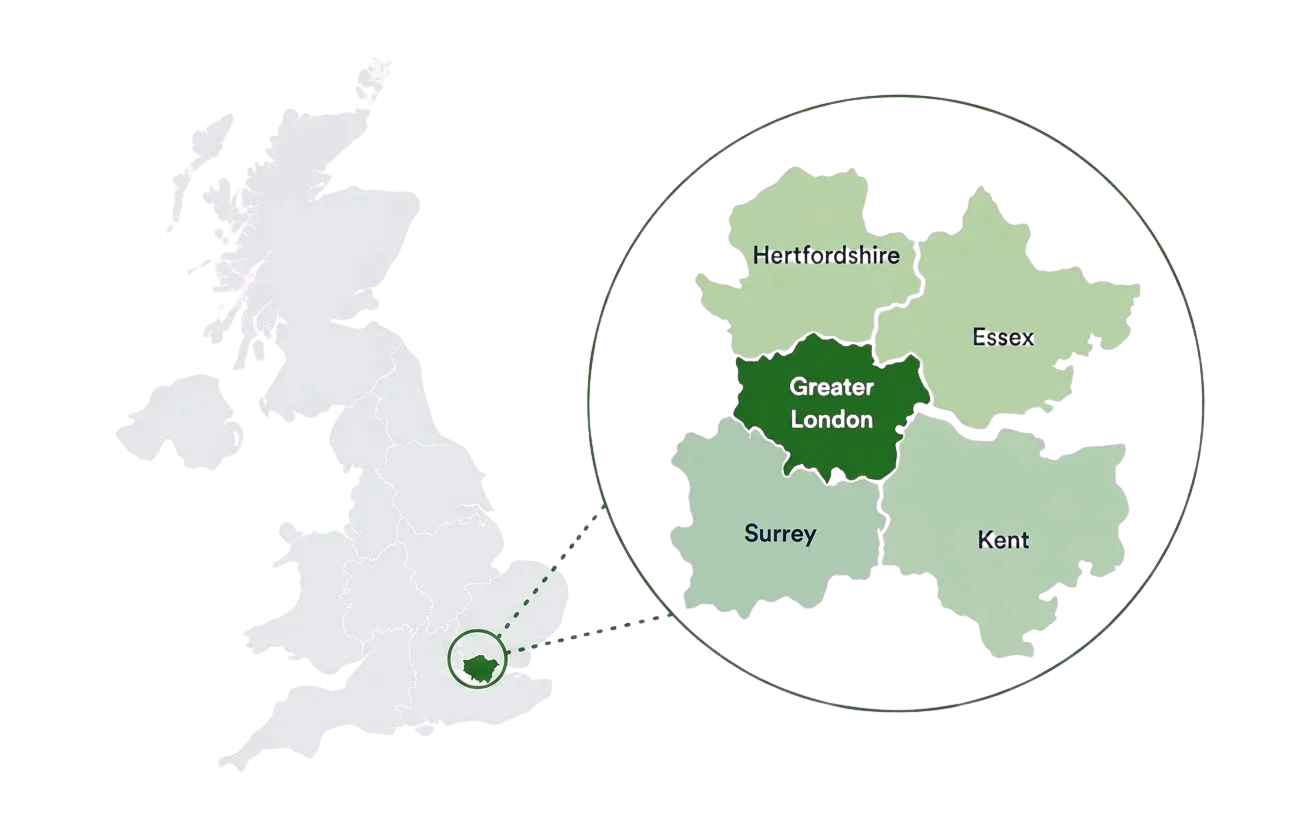
We support organisations across London, surrounding counties and selected UK locations with secure IT disposal, certified data destruction and WEEE recycling services.
Our regular service areas include Greater London, Kent, Surrey, Essex and Hertfordshire, with wider UK collections considered depending on equipment type, volume and project requirements.
Each collection is reviewed to confirm the most suitable approach before collection is arranged.
Frequently Asked Questions
What legal responsibilities apply to IT disposal?
Responsibilities can include protecting personal data, handling electronic waste through suitable routes, keeping appropriate records and ensuring equipment is managed responsibly. Exact responsibilities depend on the organisation and circumstances.
Do organisations need to destroy data before disposing of computers?
Data-bearing devices should be processed securely before reuse, recycling or disposal to reduce the risk of confidential information being accessed or recovered.
What documents should organisations keep?
Useful records can include Data Destruction Certificates, Serial Number Asset Reports, Waste Transfer Notes, collection records and other processing documentation where applicable.
Is WEEE recycling part of IT disposal responsibilities?
Yes. IT equipment is usually electrical or electronic equipment, so responsible WEEE recycling is an important part of IT disposal.
Can a professional IT disposal provider help reduce risk?
Yes. A structured provider can help with secure collection, certified data destruction, WEEE recycling and documentation after processing.
Where can I download compliance documents?
Selected licences, certificates, compliance documents, process documents, legal requirement documents and image guides can be accessed from the downloads page.
Arrange Responsible IT Disposal
If your organisation needs to dispose of IT equipment, WEEE Recycling Planet can arrange secure collection, certified data destruction, responsible recycling and documentation.
We support businesses, schools, public sector organisations and other professional environments with structured IT disposal services across London, surrounding counties and selected UK locations.