

How We Protect Your Data During IT Disposal
Protecting Data at Every Stage
WEEE Recycling Planet helps organisations protect data-bearing devices throughout the IT disposal process.
From collection through to processing and documentation, our structured approach is designed to reduce risk, maintain accountability and ensure equipment is handled responsibly.
Computers, laptops, servers, hard drives, SSDs, tablets, mobile phones and storage media may contain confidential information even when they are no longer in active use.
This guide explains how data-bearing equipment is handled during secure IT disposal. It provides general information only and does not replace legal, compliance or information security advice.
Secure Collection and Handling
Data protection begins before equipment is removed from your premises.
During collection planning, we can review the equipment type, estimated quantity, access requirements and whether data-bearing devices are included.
Equipment is handled through a structured collection process designed to reduce the risk of loss, damage or unauthorised access during removal.
Providing clear information before collection helps ensure data-bearing devices are identified and managed appropriately.
Controlled Transportation
After collection, equipment is transported for processing through controlled handling procedures.
Maintaining accountability during transportation is important, especially where computers, servers, hard drives, mobile devices or storage media are included.
The aim is to ensure equipment remains accounted for between collection and processing.
This supports a structured IT disposal process and helps organisations maintain confidence in how redundant equipment is handled.
Identifying Data-Bearing Devices
Data-bearing devices are identified and separated for appropriate handling where required.
This can include storage components found inside computers, laptops, servers, tablets, mobile phones, printers and external storage devices.
Hard drives
Solid state drives
Server drives
Laptop drives
External hard drives
USB storage devices
Memory cards
Backup media
Mobile phones and tablets
Printers with internal storage
Storage arrays and removable media
Identifying these components helps ensure they are processed securely before reuse, recycling or disposal.
Certified Data Destruction
Data-bearing devices can be processed through certified data destruction as part of the IT disposal service.
Depending on the device type, condition and project requirements, data destruction may involve physical destruction, secure wiping or another controlled method.
The appropriate method can depend on whether equipment is being reused, recycled, destroyed or processed under specific internal requirements.
Using a structured data destruction process helps reduce the risk of confidential information being accessed or recovered from redundant equipment.
On-Site Data Destruction
Some organisations require data-bearing devices to be processed at their premises before equipment is removed.
On-site data destruction may be suitable for organisations with stricter internal security requirements, sensitive data concerns or a need for witnessed destruction.
This option can provide additional reassurance where authorised staff need to observe the destruction process before remaining equipment is collected for recycling.
Documentation and Audit Records
After processing, documentation can be issued to confirm how equipment and data-bearing devices have been handled.
Data Destruction Certificate
Serial Number Asset Report
Waste Transfer Note
These records can support internal reporting, audits, procurement checks, asset management, environmental records and data protection processes.
The documentation issued may depend on the equipment type, collection scope, data destruction requirements and processing route.
Clients can also use the downloads page to access selected licences, certificates, compliance documents, process documents, legal requirement documents and image guides.
Supporting GDPR and Data Protection Responsibilities
Organisations remain responsible for protecting personal and confidential information when IT equipment is replaced, removed or disposed of.
A structured IT disposal process helps organisations manage data-bearing equipment by combining secure collection, certified data destruction, responsible recycling and documentation.
This can support internal data protection processes and help reduce the risk of data exposure.
This page is general guidance only and does not provide legal advice. Organisations should seek appropriate advice for their specific data protection responsibilities where required.
Reducing Data Disposal Risk
Data disposal risk often increases when equipment is stored for long periods, moved without records or disposed of without checking for storage devices.
Unidentified hard drives or SSDs
Old laptops left in storage rooms
Servers removed without asset records
Mobile phones and tablets not processed securely
Printers with internal storage
External drives and USB devices mixed with general equipment
Equipment reused before data is processed
Poor documentation after disposal
A structured disposal process helps organisations identify these risks earlier and manage redundant equipment more securely.
Secure Data Handling Process
Our process is designed to help organisations manage data-bearing devices from collection through to documentation.
Collection request reviewed
Equipment type and quantity confirmed
Data-bearing devices identified where required
Equipment collected through a structured process
Devices transported for processing
Data-bearing devices processed securely
Equipment directed toward reuse, recycling or recovery routes
Documentation issued after processing
This process helps organisations manage IT disposal with clearer control, better records and reduced data security risk.
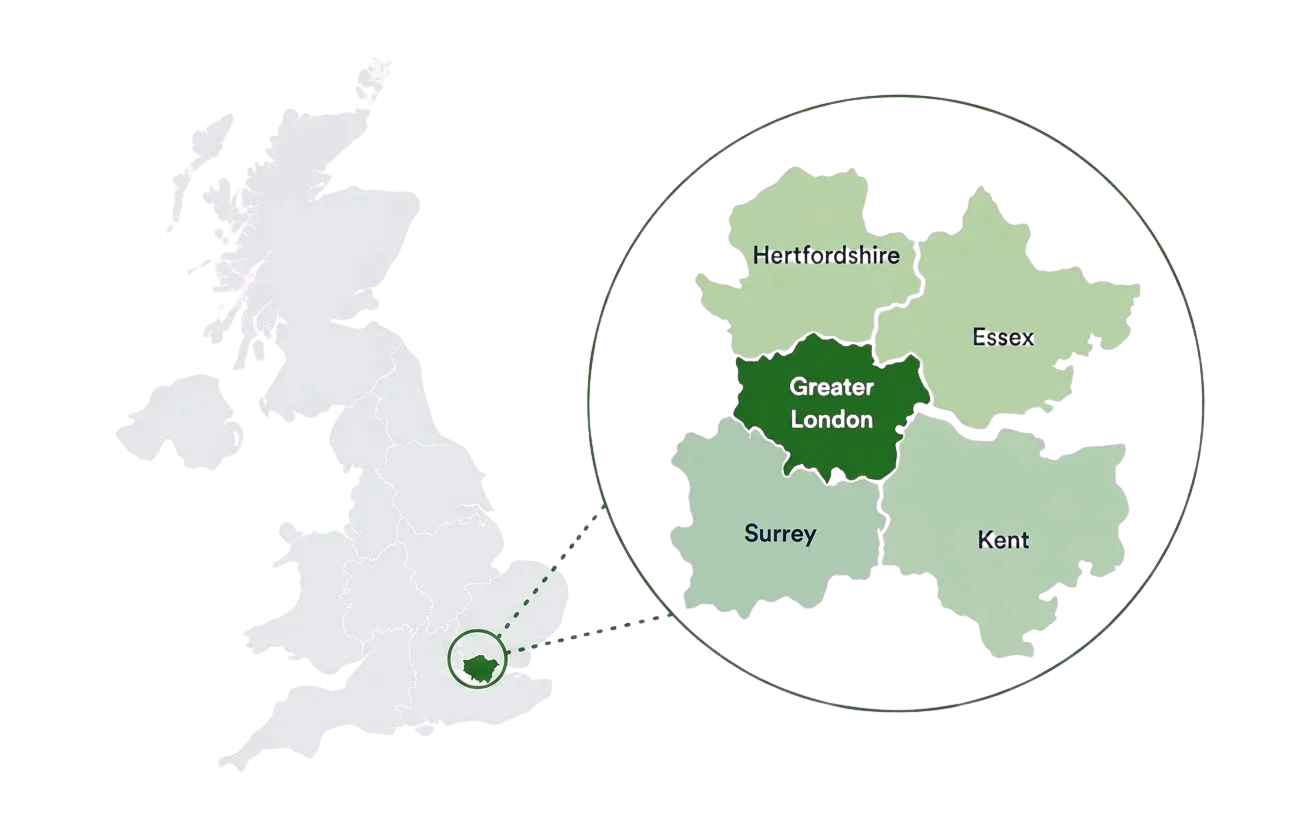
Data Protection Support Across London and Surrounding Areas
We support organisations across London, surrounding counties and selected UK locations with secure IT disposal, certified data destruction and WEEE recycling services.
Our regular service areas include Greater London, Kent, Surrey, Essex and Hertfordshire, with wider UK collections considered depending on equipment type, volume and project requirements.
Each collection is reviewed to confirm the most suitable approach before collection is arranged.
Frequently Asked Questions
Do we need to wipe devices before collection?
No. If certified data destruction is included, data-bearing devices can be processed securely as part of the disposal service.
What devices can contain data?
Computers, laptops, servers, hard drives, SSDs, mobile phones, tablets, USB drives, memory cards, printers and backup media may all contain data.
Can data destruction be carried out on site?
On-site data destruction may be available for suitable projects where data-bearing devices need to be processed at the organisation’s premises.
Do you provide a Data Destruction Certificate?
Yes. A Data Destruction Certificate can be issued where data-bearing devices have been processed through a secure data destruction service.
Is deleting files enough before disposal?
Deleting files or resetting a device does not always remove information permanently. Secure wiping or certified data destruction may be needed depending on the device and risk level.
Where can I download compliance documents?
Selected licences, certificates, compliance documents, process documents, legal requirement documents and image guides can be accessed from the downloads page.
Arrange Secure IT Disposal
If your organisation needs to dispose of computers, laptops, servers, hard drives or other data-bearing devices, our team can arrange a secure and structured collection.
We provide secure IT disposal, certified data destruction and WEEE-compliant recycling services across London, surrounding counties and selected UK locations.