

Should You Destroy or Wipe Hard Drives?
Understanding the Difference
When disposing of hard drives, SSDs and storage devices, organisations often ask whether it is better to wipe data or physically destroy the device.
Both methods aim to reduce the risk of data being accessed, but they differ in process, suitability, verification and whether the device can be reused afterwards.
The right approach depends on the level of data sensitivity, device type, reuse plans, internal policy, audit requirements and risk tolerance.
This guide provides general information only and does not replace legal, compliance or information security advice. Organisations should seek appropriate guidance for their specific responsibilities where required.
What Is Data Wiping?
Data wiping involves using software or controlled processes to overwrite or remove data from a storage device.
When carried out correctly and verified, wiping may be suitable where equipment is being reused, redeployed or refurbished.
However, wiping relies on the correct method, device compatibility, verification and audit process. If it is not completed correctly, data may still be recoverable.
Wiping may not always be suitable for damaged drives, failed devices, encrypted devices with access issues or certain types of storage media.
What Is Hard Drive Destruction?
Hard drive destruction involves physically damaging or destroying a storage device so it can no longer be used in its original form.
This may include shredding, crushing, degaussing or another controlled destruction method depending on the device type and service used.
Physical destruction is often chosen when equipment is no longer needed, reuse is not required or the organisation wants a higher-assurance route for sensitive data-bearing media.
The ICO advises organisations to use and document secure disposal methods such as device wiping, degaussing or hardware shredding, and to keep records of devices awaiting destruction and their location.
Which Method Is More Suitable?
There is no single answer that applies to every organisation or every device.
Data wiping may be suitable where the device is working, the organisation wants to reuse or refurbish equipment, and the wiping process can be completed and verified properly.
Physical destruction may be more suitable where devices contain sensitive information, are damaged, are no longer required for reuse or where internal policy requires destruction.
Organisations should choose a method based on data sensitivity, device condition, storage type, compliance expectations, audit needs and environmental considerations.
When Should You Wipe a Hard Drive?
Wiping may be appropriate when devices are being reused within the same organisation, redeployed to another team, refurbished or prepared for resale through an approved process.
This approach can help preserve equipment value and support reuse where the data risk can be managed securely.
Wiping should only be carried out using reliable methods, followed by verification and clear records showing the process used.
If the drive cannot be accessed, is damaged, fails verification or contains highly sensitive data, physical destruction may be more appropriate.
When Should You Destroy a Hard Drive?
Destruction may be appropriate when disposing of devices that contain sensitive, confidential or regulated information.
This can include customer records, financial information, employee data, student records, patient information, internal systems, contracts, access credentials or operational files.
Physical destruction can provide a high-assurance route when equipment is not being reused and the organisation wants clear evidence that storage media has been processed through a controlled destruction method.
For many organisations, destruction is preferred where data security is the main priority and the storage device does not need to be reused.
Hard Drives, SSDs and Other Storage Media
Different storage devices may require different approaches.
Traditional hard drives, SSDs, USB drives, memory cards, backup tapes, mobile devices and server storage media can all contain sensitive information.
SSDs and flash-based storage can require different sanitisation or destruction considerations compared with traditional spinning hard drives.
Organisations should treat any data-bearing device as a potential risk until it has been reviewed, wiped, destroyed or otherwise processed through an appropriate secure method.
Hard disk drives
Solid state drives
Laptop drives
Server drives
External hard drives
USB storage devices
Memory cards
Backup drives and tapes
Mobile phones and tablets
Storage arrays and removable media
Compliance and Data Protection
Organisations should ensure that data-bearing equipment is handled securely when disposing of IT equipment.
Deleting files or formatting a device may not be enough to prevent data from being accessed later.
Using secure data destruction methods and keeping clear records can help organisations demonstrate that appropriate steps were taken to protect personal or confidential information.
The ICO notes that it is important to properly delete personal information before selling or disposing of hardware so it cannot be accessed by someone else.
The Role of Professional IT Disposal Services
Professional IT disposal services can help organisations choose and manage the right data destruction approach depending on equipment type, data sensitivity and project requirements.
A structured process can include secure collection, asset recording, certified data destruction, WEEE-compliant recycling and documentation after processing.
Working with a suitable provider helps organisations reduce data risk, maintain records and ensure equipment is directed toward appropriate reuse, recycling or destruction routes.
Documentation and Verification
After data destruction has been completed, documentation may be issued confirming how data-bearing devices have been processed.
Data Destruction Certificate
Serial Number Asset Report
Waste Transfer Note
These records can support internal reporting, audits, procurement checks, asset management and data protection processes.
Clients can also use the downloads page to access selected licences, certificates, compliance documents, process documents, legal requirement documents and image guides.
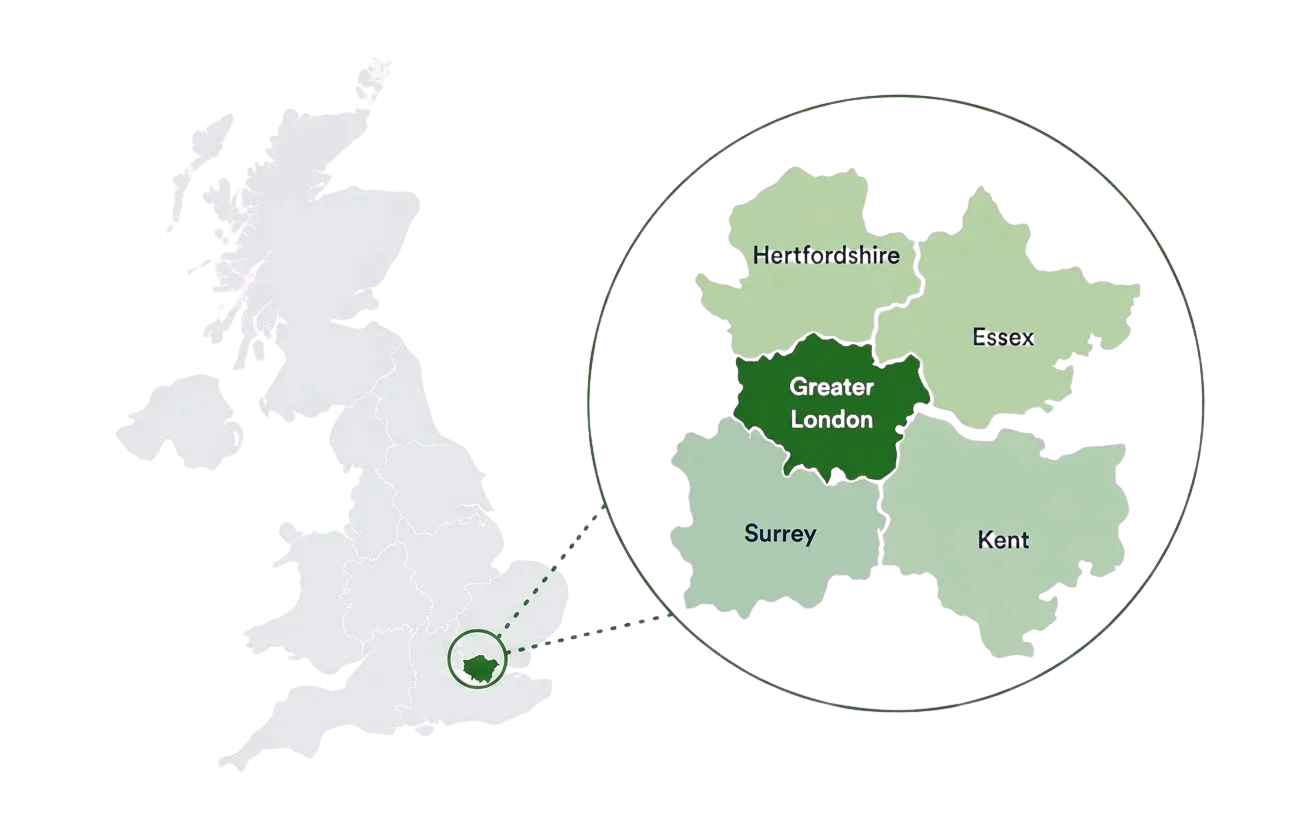
Secure Data Destruction Across London and Surrounding Areas
We provide secure data destruction, hard drive disposal and IT equipment recycling services across London, surrounding counties and selected UK locations.
Our regular service areas include Greater London, Kent, Surrey, Essex and Hertfordshire, with wider UK collections considered depending on equipment type, volume and project requirements.
Each collection is reviewed to confirm the most suitable approach before collection is arranged.
Frequently Asked Questions
Is it better to destroy or wipe a hard drive?
It depends on the device, reuse plans, data sensitivity and internal policy. Wiping may be suitable for reuse where it can be verified. Destruction may be more suitable for sensitive data or devices that will not be reused.
Is deleting files enough before disposal?
No. Deleting files or formatting a drive does not always remove the underlying data. Secure wiping or certified data destruction may be needed.
Can SSDs be wiped?
Some SSDs can be securely erased using appropriate methods, but flash storage can require different handling compared with traditional hard drives. Suitability should be reviewed based on the device and required assurance level.
Do you provide a Data Destruction Certificate?
Yes. A Data Destruction Certificate can be issued where data-bearing devices have been processed through a secure data destruction service.
Can hard drives be destroyed on site?
On-site data destruction may be available for suitable projects where data-bearing devices need to be processed at the organisation’s premises.
Where can I download compliance documents?
Selected licences, certificates, compliance documents, process documents, legal requirement documents and image guides can be accessed from the downloads page.
Arrange Secure Data Destruction
If your organisation needs to securely dispose of hard drives, SSDs or storage devices, our team can arrange a structured and documented collection.
We provide professional secure data destruction, hard drive disposal and WEEE-compliant recycling services across London, surrounding counties and selected UK locations.